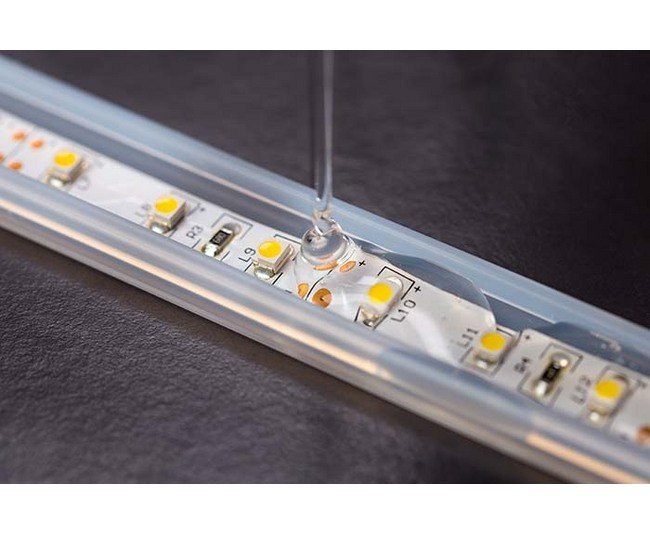
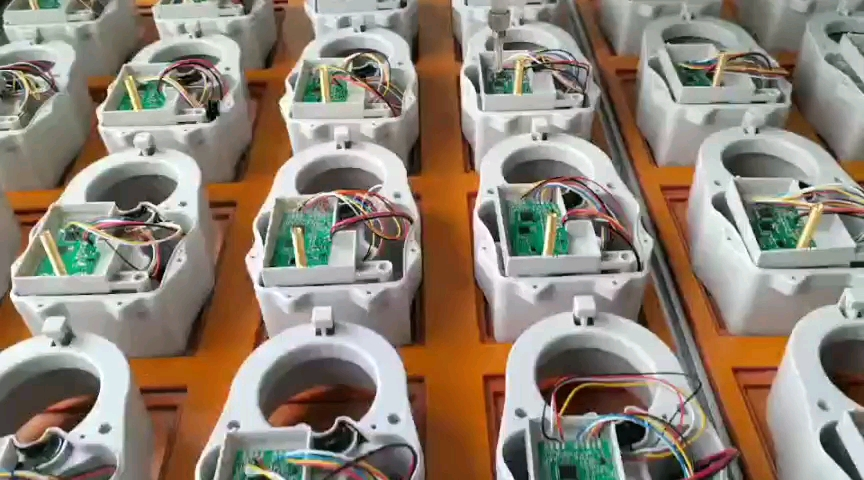
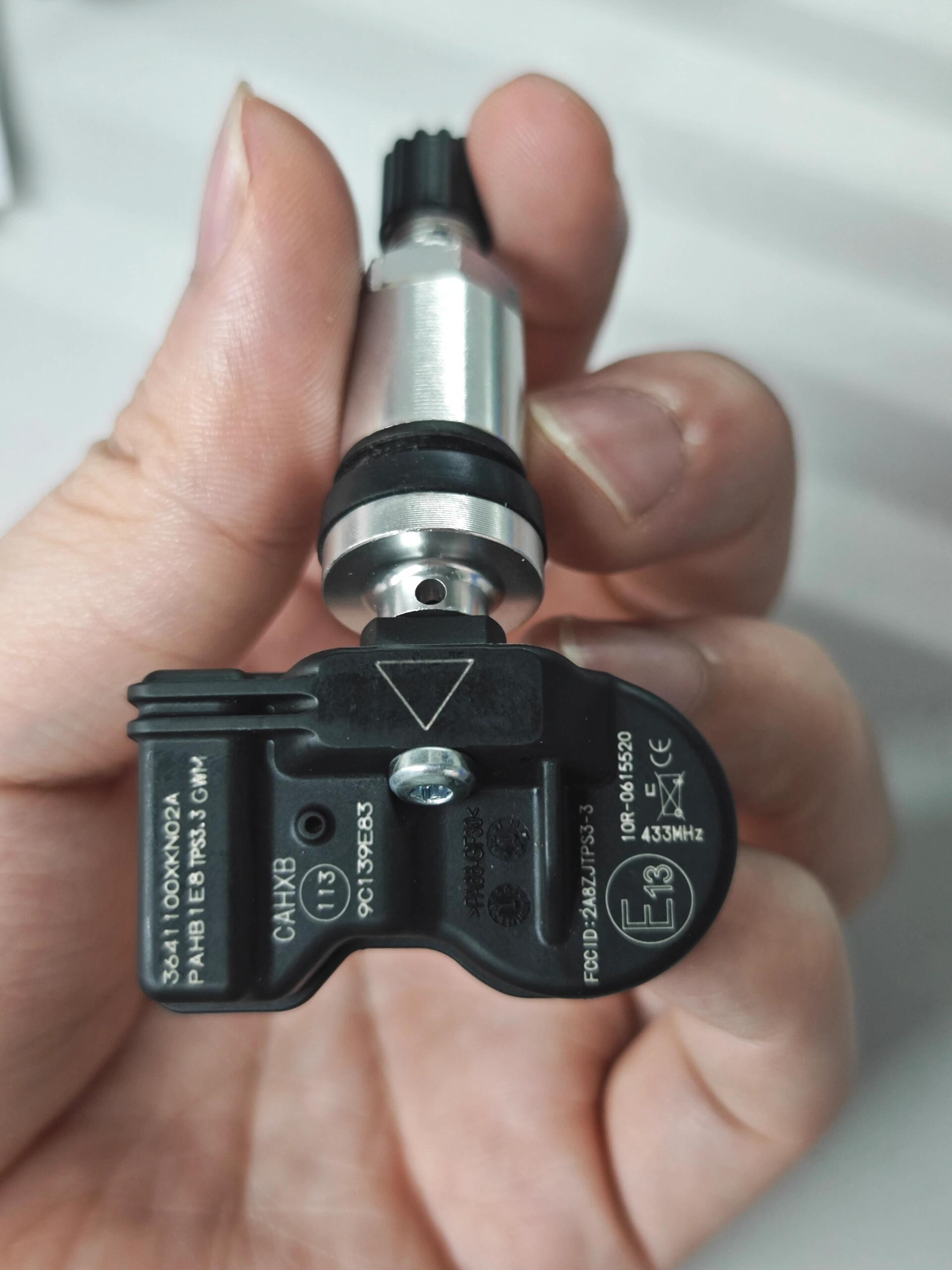
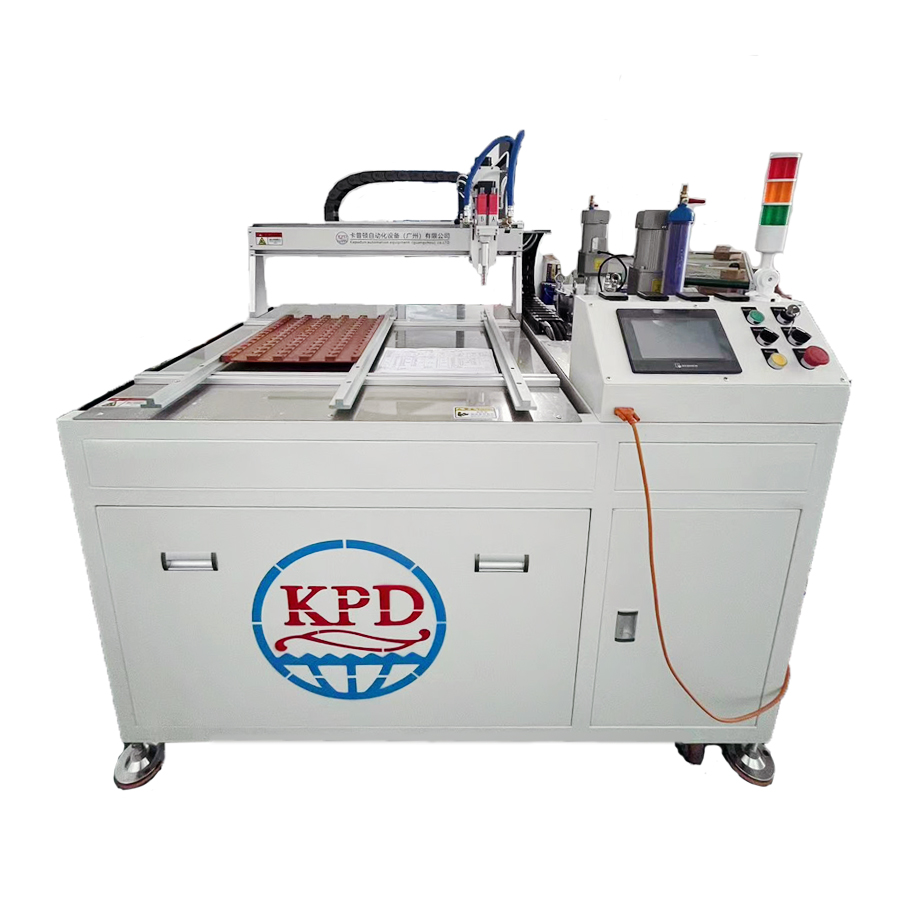
Ignition coils require highly precise glue dispensing results, necessitating a vacuum process. This demands specialized equipment with exceptional vacuuming capabilities, ensuring short extraction times and prolonged vacuum periods for optimal product quality.
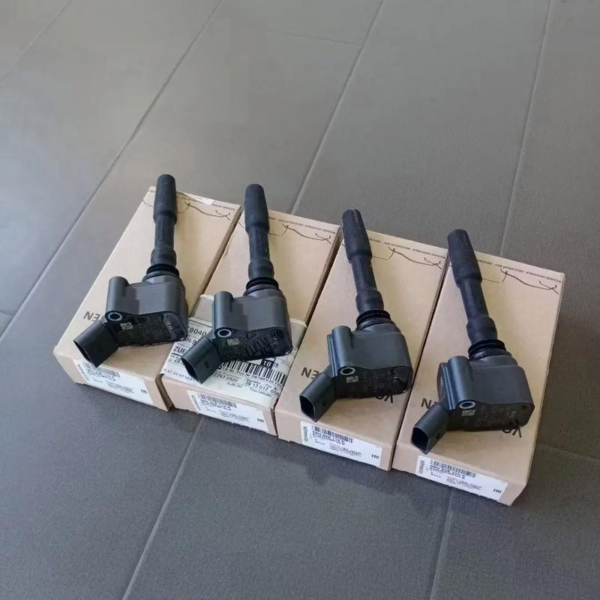
Vacuum Glue Dispensing Machine – From a process perspective, gaps between wires can be caused by the following:
1. Insufficient vacuum during dispensing prevents complete removal of air, hindering material impregnation.
2. Insufficient preheating of the sample before dispensing prevents rapid viscosity reduction, impacting impregnation. For manual dispensing or pre-mixing/degassing followed by vacuum dispensing, high mixing/degassing temperatures, long processing times, exceeding the material’s shelf life, and failure to promptly enter the curing process after dispensing all increase material viscosity, affecting coil impregnation. For thermosetting epoxy potting compounds, higher initial temperatures result in lower viscosity, with viscosity increasing rapidly over time. Therefore, to ensure good impregnation of the coil by the material, the potting compound should be kept within a suitable temperature range and used within its applicable period.
Before potting, the test piece should be heated to the specified temperature. After potting, the curing process should be initiated promptly, and the potting vacuum degree must meet the technical specifications.
3. Incomplete Curing on the Surface or in Certain Areas
Incomplete curing on the surface or in certain areas is often related to the curing process. Experts from the China Epoxy Resin Industry Association stated that the main reasons are: malfunction of the metering or mixing device; operator error; sedimentation of component A due to prolonged storage, resulting in an imbalance in the actual resin-curing agent ratio; prolonged exposure of component B to open storage, leading to moisture absorption and ineffectiveness; and failure to promptly initiate the curing process during periods of high humidity, causing moisture absorption on the surface of the object. In short, the details and process of potting are crucial to obtaining a good potted product.
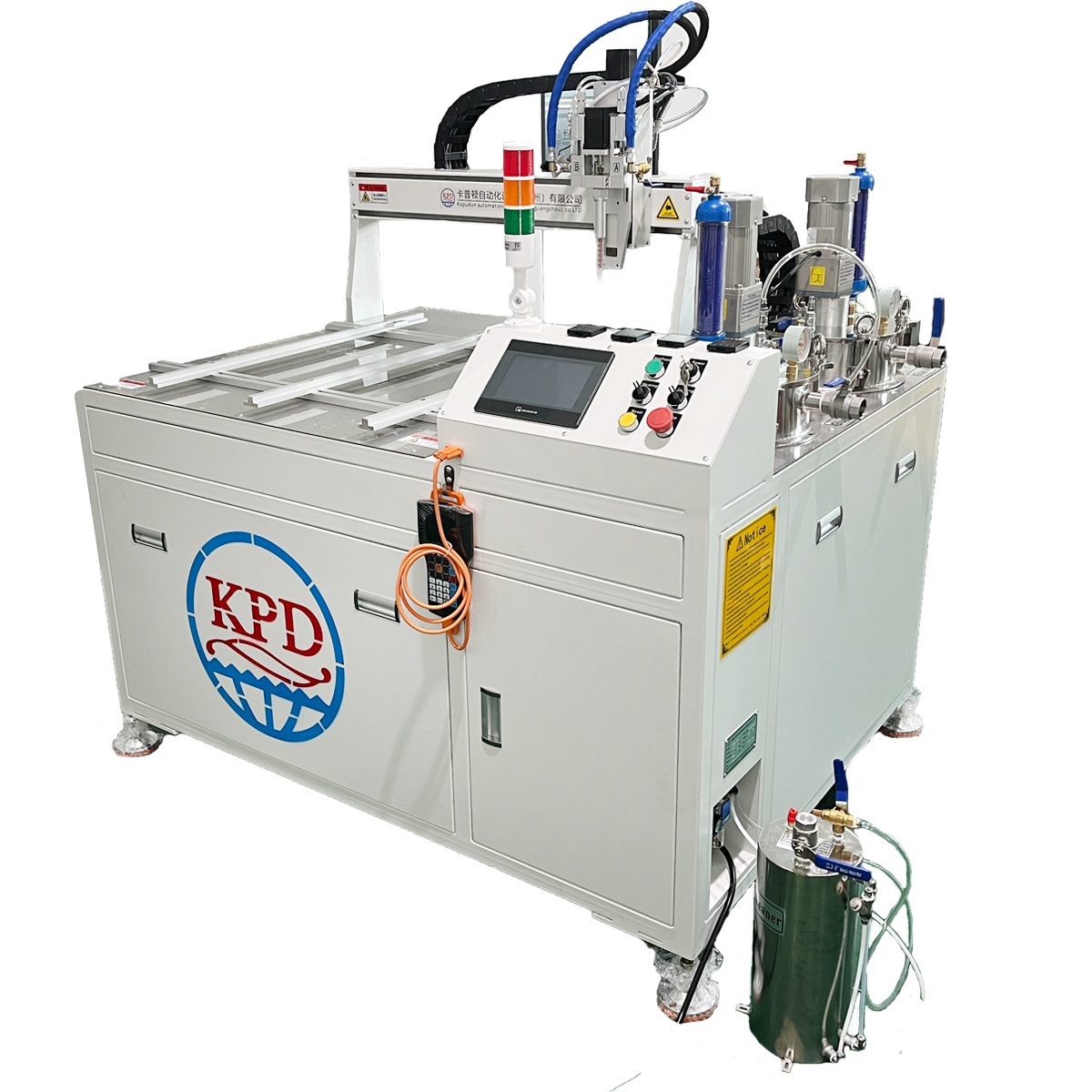
The ORIX vacuum potting machine can solve the above problems because it performs potting automatically under vacuum, avoiding errors caused by manual operation. Automatic potting can be performed by inputting the desired potting program.
Below are some issues regarding adhesive properties:
1) Discharge, arcing, or breakdown phenomena: During the encapsulation process, improper potting techniques often lead to discharge, arcing, or breakdown phenomena during device operation. This is because the high-voltage coil wire diameter of these products is very small (generally only 0.02-0.04mm), and the potting compound fails to completely impregnate the turns, leaving gaps between the coil turns. Since the dielectric constant of these gaps is much smaller than that of the epoxy potting compound, an uneven electric field will be generated under AC high voltage conditions, causing partial discharge at the interface, leading to material aging and decomposition, and resulting in insulation failure.
2) Pinholes, local depressions, and cracks on device surfaces: During the heating and curing process, the potting compound will undergo two types of shrinkage:
Chemical shrinkage during the phase change from liquid to solid and physical shrinkage during the cooling process. The chemical shrinkage during the curing process has two stages: the shrinkage that occurs from the start of the chemical cross-linking reaction after potting to the initial formation of the micro-network structure is called gel pre-curing shrinkage, and the shrinkage that occurs from the gel to the complete curing stage is called post-curing shrinkage. The shrinkage amounts in these two processes are different. In the former, the physical state changes abruptly from liquid to a network structure, resulting in a greater consumption of reactive groups and a higher volume shrinkage than in the latter. If the potted specimen undergoes a single high-temperature curing process, the two stages of curing are too close together, with gel pre-curing and post-curing occurring almost simultaneously. This not only causes excessively high exothermic peaks and damages the component but also generates significant internal stress in the potted part, leading to defects in the product’s internal structure and appearance. To obtain good parts, it is crucial to focus on matching the curing speed of the potting compound with the curing conditions during the formulation design and curing process. A common approach is to use a segmented curing process at different temperature zones based on the properties and intended use of the potting compound. In the gel pre-curing temperature zone, the curing reaction of the potting compound proceeds slowly, the heat of reaction is gradually released, the material viscosity increases, and volume shrinkage occurs gradually. During this stage, the material is in a fluid state, and the volume shrinkage manifests as a drop in the liquid level until gelation, completely eliminating the internal stress caused by volume shrinkage in this stage. The temperature rise from gel pre-curing to post-curing should be gradual. After curing, the potted part should be cooled slowly in sync with the heating equipment. This multi-pronged approach reduces and adjusts the internal stress distribution of the part, preventing shrinkage cavities, depressions, and even cracking on the surface. The formulation of curing conditions for the potting compound should also consider the arrangement and fullness of components within the potted device, as well as the size, shape, and volume of each component. For components with a large volume but few embedded elements, appropriately lowering the gel pre-curing temperature and extending the curing time is entirely necessary.
About machine details please contact by whatsapp +86 173 4703 1006