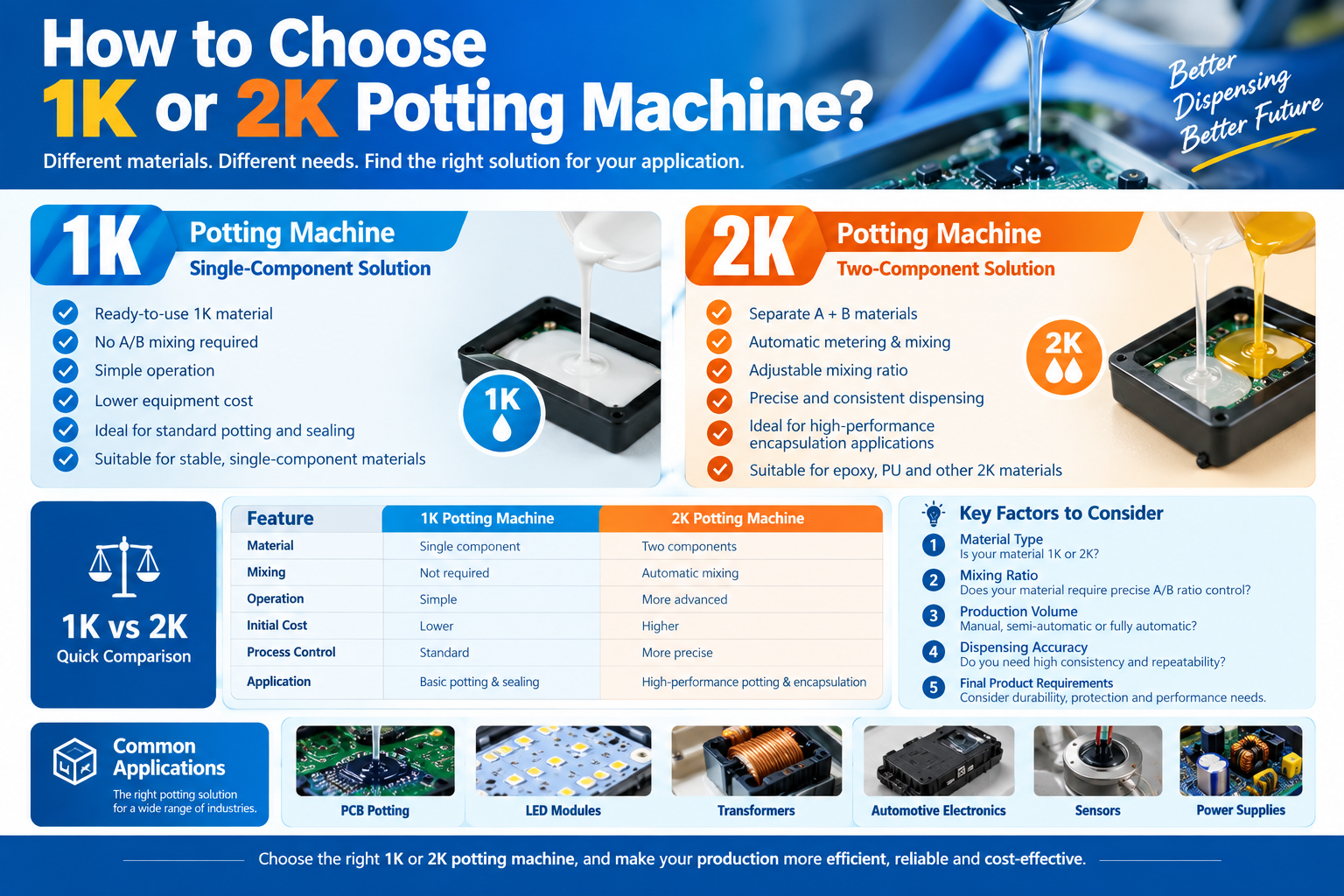
Precision Two-Component Mixing and Dispensing Machine for Current Transformer Encapsulation
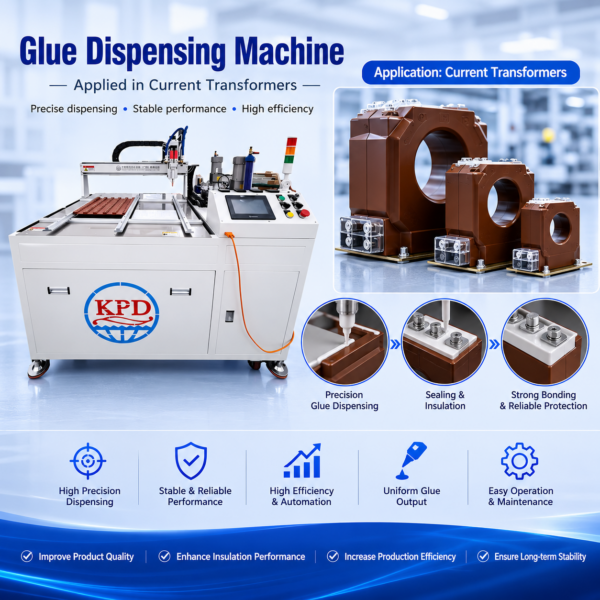 Ensuring long-term electrical insulation and mechanical protection in Current Transformers (CT) requires strict precision during the resin potting process. Air voids, incorrect mixing ratios, or precise volumetric drift can cause micro-partial discharges, leading to dielectric breakdown and equipment failure in high-voltage environments.
Our Two-Component Mixing and Dispensing Machine is engineered specifically for the demanding requirements of current transformer encapsulation, delivering bubble-free, highly accurate 2K epoxy and polyurethane metering, mixing, and dispensing.
Why Precise 2K Meter-Mix-Dispensing Matters for Current Transformers
Current transformers and instrument transformers operate under extreme thermal and electrical stress. Traditional or manual batch mixing introduces severe quality risks:
-
Partial Discharge Risk: Trapped micro-bubbles act as weak dielectric points, accelerating partial discharge (PD) degradation.
-
Inconsistent Mix Ratios: Imprecise proportioning of resin (A) and hardener (B) leaves unreacted polymers, causing tacky surfaces or reduced thermal stability.
-
Viscosity & Filler Settlement: A-component resins often contain inorganic fillers (like silica powder) to enhance thermal conductivity. Settling leads to non-uniform encapsulation.
To overcome these challenges, automated dynamic/static meter-mix technology with vacuum integration is essential.
Key Features & Technological Advantages
| Feature | Engineering Benefit |
| Precision Metering Pumps | High-precision gear or piston pumps maintain accuracy up to ±0.5%, preventing ratio drift. |
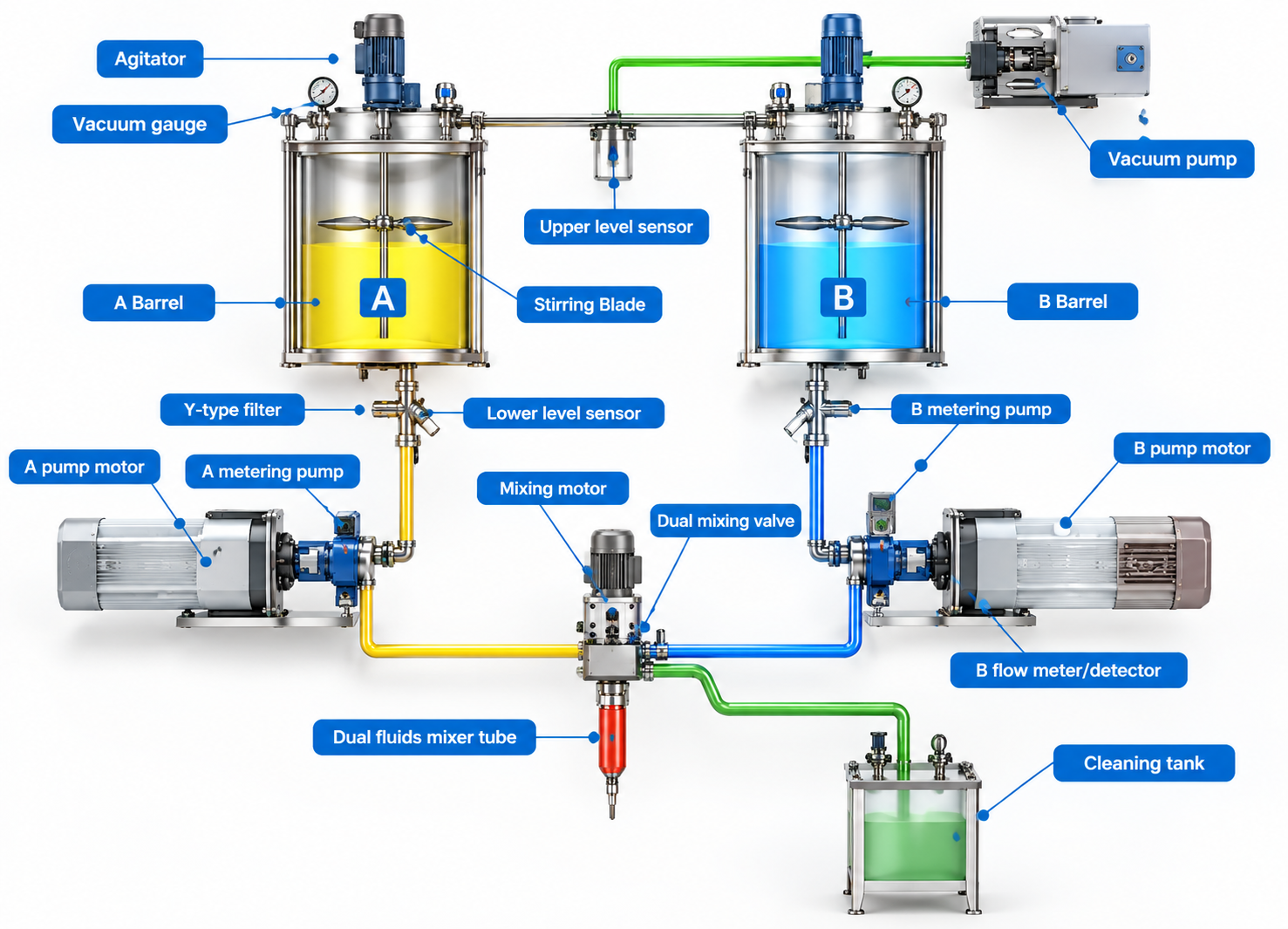
| Continuous Online Degassing | Vacuum degassing system removes micro-bubbles from components prior to dynamic mixing. |
| Automated Filler Agitation | Electric stirrers prevent filler sedimentation in resin tanks for homogeneous viscosity. |
| Dynamic / Static Mixing Valve | Ensures thorough blending of high-viscosity epoxy or PU systems before dispensing into moulds. |
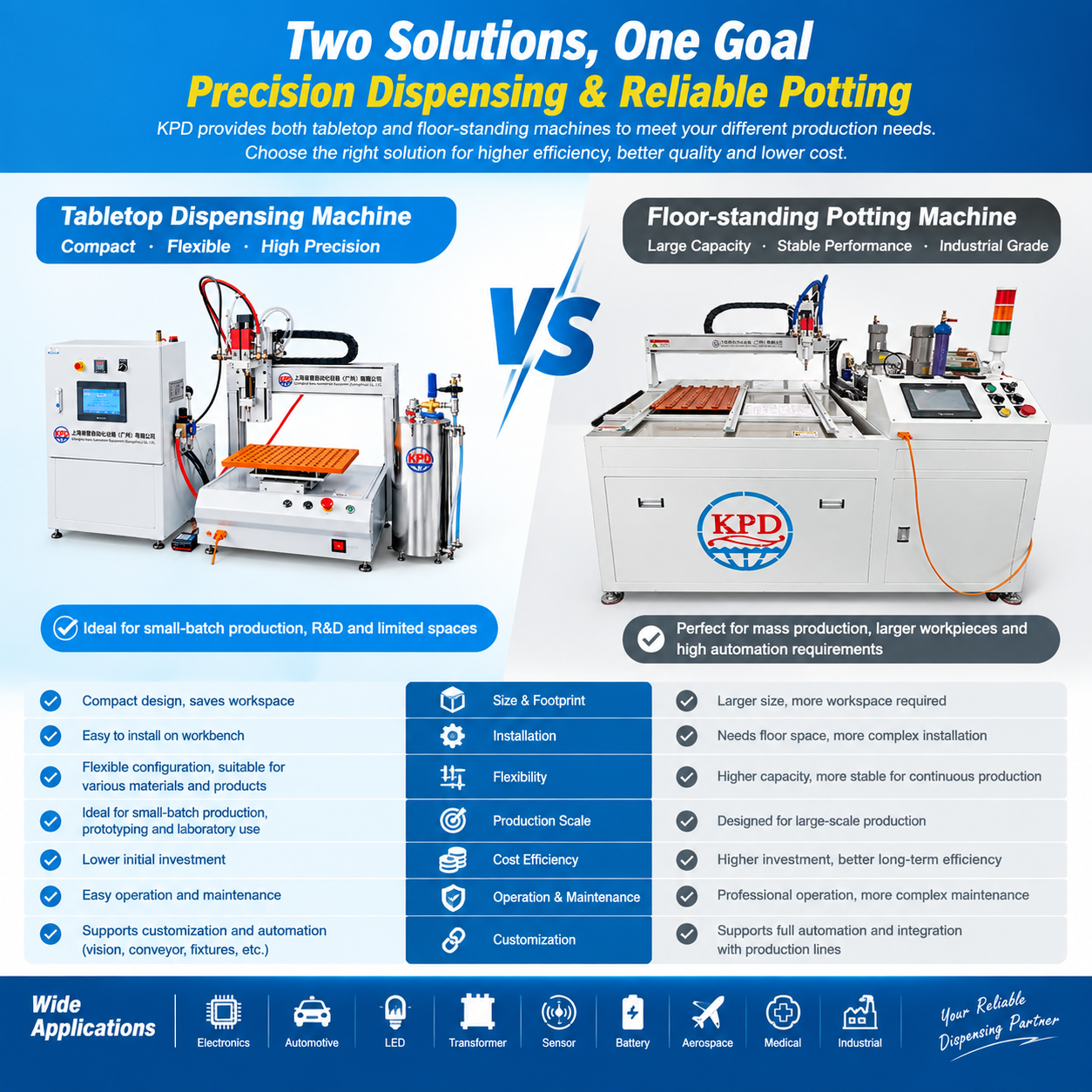
| Multi-Axis CNC Motion Control | Teachable 3D XYZ robotic trajectories for seamless mould filling on multi-cavity production lines. |
Process Overview: From Tanks to Encapsulation
[ A & B Raw Material Tanks ]
          │
          ├──> Heated & Vacuum Degassed
          │
[ Precision Metering Pumps (Ratio Control) ]
          │
          ├──> Dynamic/Static Mixing Head
          │
[ Automated Motion System Dispensing into CT Moulds ]
-
Pre-treatment & Temperature Control: Component A and B are continuously conditioned under vacuum and regulated heating to maintain stable dispensing viscosity.
-
Dynamic Ratio Control: Metering pumps deliver precise volumetric proportions directly to the mixing head, accommodating ratio ranges from 100:10 to 100:100.
-
Vacuum Potting (Optional): Dispensing can be executed directly inside a vacuum chamber or in ambient atmospheric conditions with vacuum-assisted degassing.
Technical Specifications
-
Applicable Materials: Epoxy Resin, Polyurethane (PU), Silicone
-
Mixing Ratio Range: Adjustable from
100:10to100:100(By weight or volume) -
Dispensing Accuracy:
±0.5% -
Viscosity Range: Up to
100,000 mPa.s -
Tank Capacity: Standard 30L / 60L / 100L stainless steel pressure tanks with level sensors
-
Automation: Touchscreen PLC interface with recipe storage for multi-model CT switching